Julie’s new vimeo chanel
Check out videos of some of Julie’s performances now online at vimeo:
http://vimeo.com/ashevillebutoh
More updates and video coming soon.
20081010-butap from Julie Gillum on Vimeo.
Authentic Japanese dance in Asheville, NC
Check out videos of some of Julie’s performances now online at vimeo:
http://vimeo.com/ashevillebutoh
More updates and video coming soon.
20081010-butap from Julie Gillum on Vimeo.
learned in Japan this past summer.
Here is the info about my upcoming workshop. Please let your friends know about this opportunity and feel free to contact me with any questions you have. Hope you can come!
What: Butoh Dance Workshop
When: Saturday, November 21, 1:00 – 4:00
Where: Bryson Gym, Warren Wilson College
Who: Taught by Julie Becton Gillum
Cost: $30.00 (FREE FOR WWC STUDENTS)
Contact: Julie Becton Gillum, email: jbgbutoh@gmail.com,
Telephone: (828)683-1377
“Create the form and the soul will follow.” Tatsumi Hijikata (founder of butoh)
“Follow your heart and the form will reveal itself.” Kazuo Ohno (founder of butoh)
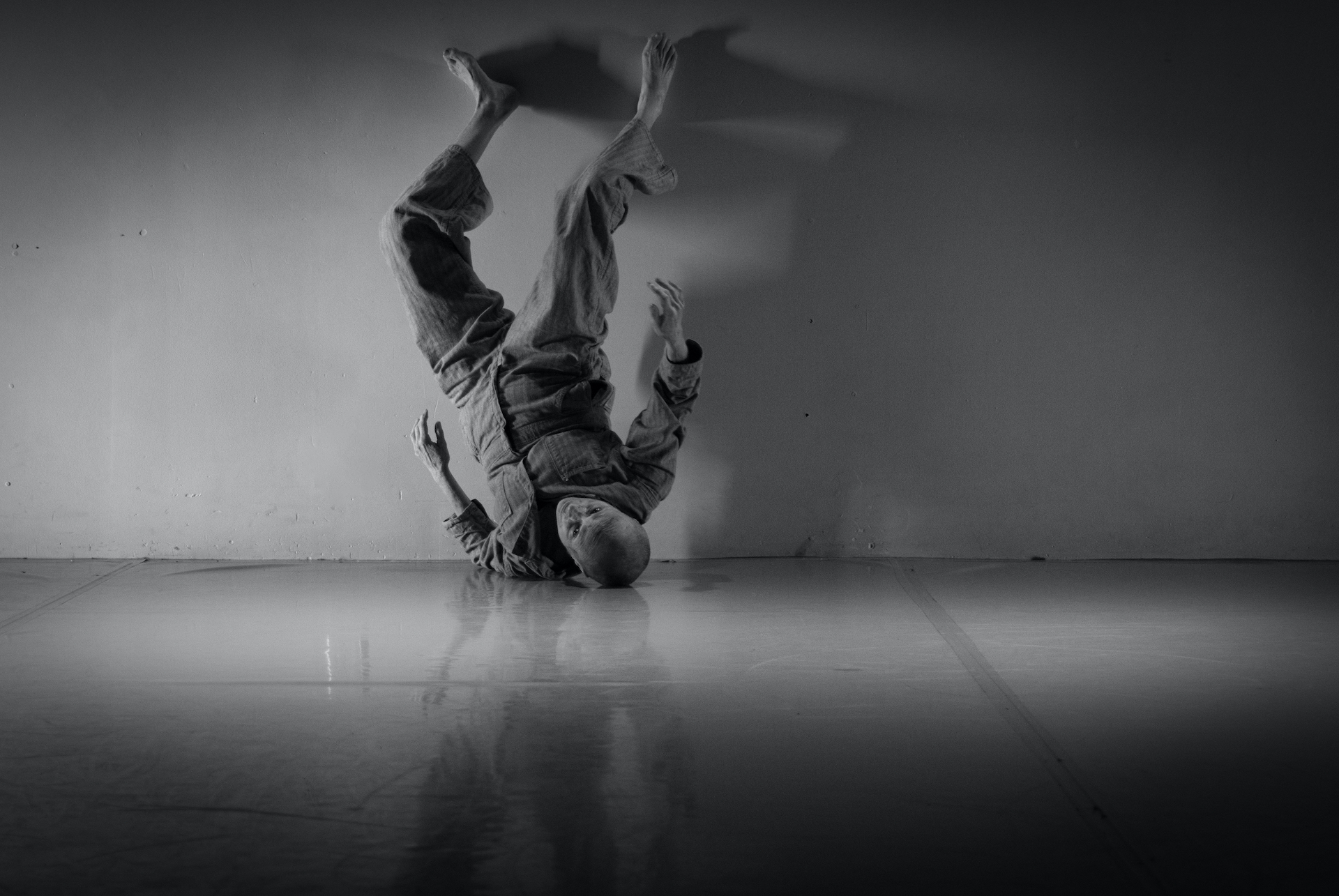
Butoh History: Originating in post WWII Japan, Butoh dance is a postmodern movement in which formal dance technique is eschewed in favor of primal and idiosyncratic styles that transform the human body and allow raw physical energy to come into being. Butoh has revolutionized what dance is and can be. It ’s influence on today’s dance world equals that of Martha Graham or Merce Cunningham. Butoh is an attempt to create new forms of movement and expression. Butoh uses the body brazenly, in its most corporal state, as a battleground to attain personal, social, or political transformation. It searches for the dance that pushes buttons, steps on toes and slips between the cracks of definition in order to reveal the fervent beauty of the unique human spirit.
Biography of Julie Becton Gillum: Julie Gillum has been creating, performing and teaching dance in the US and internationally for over 40 years. She currently teaches modern dance, musical theatre, performance art and butoh at Warren Wilson College. Gillum’s primary form of artistic expression has become butoh, which she has been practicing, performing and teaching since 1997. She has created and presented major pieces in the genre, at a variety of venues in New York, Chicago, San Francisco and Mexico. Gillum was awarded the 2008-09 NC Choreography Fellowship and used the funds to go to Japan this past summer to study butoh at the source.
During her three month stay in Japan, Gillum studied primarily with Yoshito Ohno, son of Kazuo Ohno. She also studied extensively with Natsu Nakajima, a disciple of Hijikata during the early days of butoh. In addition she took weekly classes with Seisaku, who danced with Yoko Ashikawa, Hijikata’s first female dancer. Gillum also took intensive workshops and performed with internationally renowned butoh companies, Dairakudakan and Sankai Juku. The November workshop will delve into new material she learned in Japan this past summer.
Sankai Juku is known for their visually stunning, ritualistic movement style, sensually performed by only men. The workshop was taught by director Semimaru, who was the original member of the company whose work is choreographed by Amagatsu. Members of the company took class with us and performed with us during the final performance at the end of the week.
During this workshop I learned a lot about the Noguchi Taiso method of body conditioning which is used by many butoh teachers. This method defines the body as a skin bag filled with water in which float the bones, muscles and organs. Movements involve shaking, waving, floating. Spinal alignment, a central axis, relaxed shoulders, and hanging from a string are basic to Noguchi Taiso. Semimaru also uses the ideas of tension /relaxation, center of gravity, vertical /horizontal, breathing, and rhythm in this work. These exercises felt so good to my body. I plan to continue them to keep me loose and strong.
The movement material we performed was not particularly interesting and used the same quality (soft, slow, wavy) throughout.
I did not feel a strong connection with Semimaru who is not particularly warm or friendly. I felt he just wanted us to pay our money, not make too much trouble and then go quietly away.
So far I have taken most of my classes with Yoshito Ohno and Natsu Nakajima. By meeting people in these workshops, I have found out about other classes and performances around Tokyo. Even though I get most of my information via translations from bilingual students, I feel I am gaining some valuable information that I can work on for years. But I am sure much is lost because of the language barrier.
I took class with a Sankai Juku dancer that seemed like Martha Graham gone butoh; I probably will not go back to that one. But I did take a class with Seisaku, who studied with Yukio Waguri and is an excellent teacher. His work is based on emptiness in the body, not images, and a new way of defining space. The first half of the class is a thorough physical warm-up conducted by Yuri, a modern /ballet trained dancer who has been drawn to butoh.
Natsu’s classes start with Noguchi Seitai, exercizes using massage, breathing techniques, and physical training. In her creative work she encourages use of dance elements (space, time and energy) as well as blending abstract dance movement with theatre actions. She claims that Hijikata believed that butoh was pure theatre.
Yoshito’s classes involve no warm-up, so I have to arrive early to get these old bones moving. His style is warm, generous, and encouraging filled with imagistic suggestions which are quite poetic and inspiring. He often quotes and imitates both Hijikata and Kazuo and modestly refers to himself as shadow or frame. Though in his 70’s, he is still a vibrant force, touring the world, performing and teaching.
After all classes there is social time. Yoshito always serves tea or wine and snacks. Often everyone goes out for drinks and delicious Japanese food served family style. I love this country, its customs, and most of all its people!
What: Butoh Performance
Where: The Pavillion at Warren Wilson College
When: Tuesday May 12, 2009, 6:30 PM (Bring a picnic)
FREE
“Lifeblood” a collaborative duet with Julie Becton Gillum and Michael McCue will premiere. The piece explores friendship and gender roles. A new piece, yet to be titled, will be performed by the WWC butoh class. In addition, the Modern Dance Technique class will perform a demonstration of the work they have accomplished this semester and Heather Sevcik will perform a piece inspired by her independent study “Affects of Sexual Abuse on Pregnancy, Birth and Mothering.”